Pricing Gold Coast Condos: Comp Strategies That Work
January 15, 2026
January 15, 2026
Two condos in the same Gold Coast tower can look similar, yet sell for very different prices. If you have ever wondered why, you are not alone. Pricing here is a building-by-building exercise where tier, view, HOA fees, and amenities carry real weight. In this guide, you will learn a simple, defensible way to comp and price Gold Coast condos so you can hit the market with confidence and avoid leaving money on the table. Let’s dive in.
The Gold Coast is a mix of historic low-rises, co-ops, and luxury high-rises. Buildings right next to each other can have very different amenities, HOA fees, reserves, and views. That means a generic neighborhood average will not price your condo accurately.
A smart comp strategy focuses on your building first, then expands carefully to nearby, similar buildings. You will use recent closed sales, verify details in local records, and make targeted adjustments for time, size, view, parking, condition, and HOA. The result is a price that buyers understand and appraisers can support.
Anchor your analysis at the building level. Units that share the same floor plan and tier usually capture the biggest drivers of value. In many Gold Coast towers, the same tier repeats on multiple floors, which makes comparisons powerful and clean.
If you do not have enough same-building sales, widen your search carefully. Focus on the same block or a building within 1 to 2 blocks that shares a similar vintage, amenity profile, exposure, and service level. Keep the comparison apples to apples. Co-ops and condos can be very different, so convert or exclude results that are not comparable.
Your job is to explain the price differences that matter and ignore the ones that do not. Use paired sales when you can, especially within the same building and tier, to quantify premiums.
Markets move, sometimes by a few percent over a quarter. If your best comp closed several months ago, apply a time adjustment based on local month-to-month shifts for Gold Coast condos. Track median sold price, days on market, months of inventory, and list-to-sale ratios through local MLS statistics.
Price per square foot is useful for size adjustments, but it can mislead across different tiers or layouts. When there is a large size gap, look for paired sales of similar floor plans in your building to estimate the per-square-foot effect more precisely.
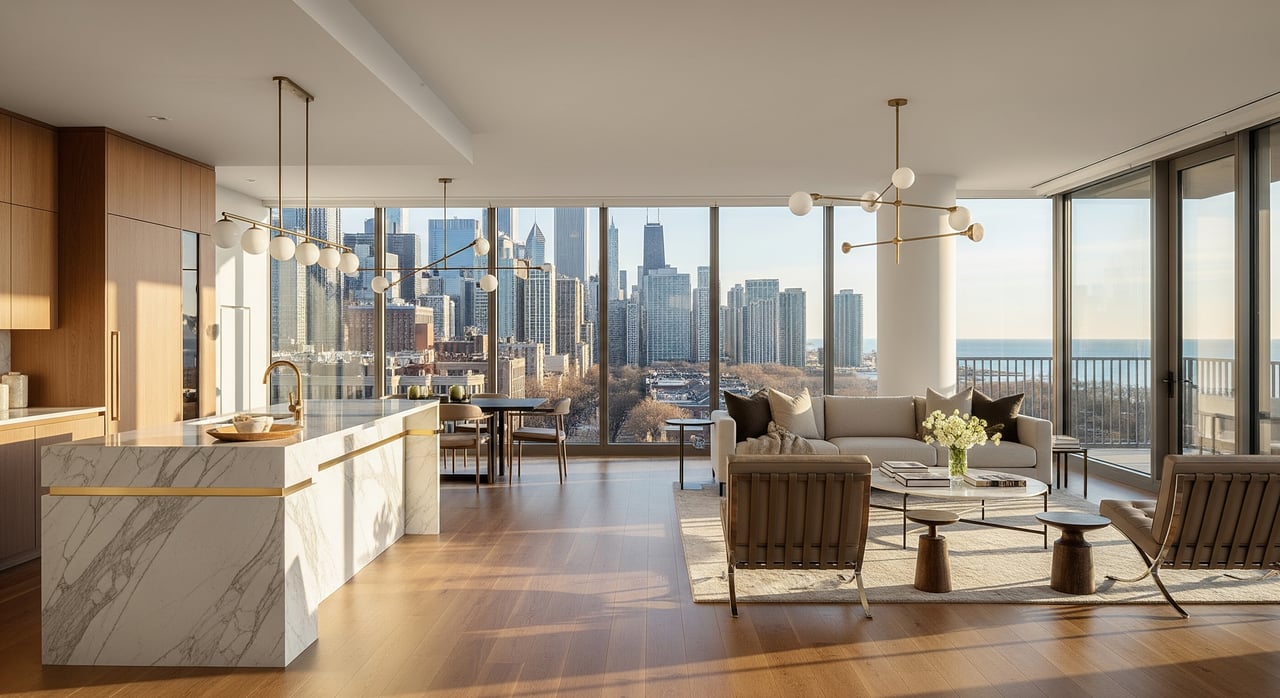
Higher floors often mean better light and less street noise. Unobstructed lake, park, river, or skyline views can justify a real premium. The best way to nail this is with paired sales in the same tier across different floors or exposures. Also consider view durability. Planned construction, seasonal tree cover, or nearby permits can change sightlines over time.
Confirm whether parking is deeded, leased, or valet. Deeded spaces tend to be capitalized into the sale price more consistently than leased spaces. Note the space type and size, and whether storage lockers are included. These details help you make clean, defensible adjustments.
Buyers pay for turnkey. Newer kitchens and baths, updated flooring, modern lighting, and recent mechanicals often carry a premium. When the condition differs, use updated units in the same building as a benchmark, or estimate a realistic cost to cure to calibrate the gap.
Monthly HOA fees directly affect affordability. Larger fees can justify a price adjustment when compared to similar units with lower fees. Review the association budget, reserve study, and recent meeting minutes. Special assessments, planned capital projects, or weak reserves can depress value and should be accounted for in your pricing.
A tier is a repeating stack of units with the same layout and exposure. Knowing your tier helps you find the best paired sales. It is one of the most powerful tools for view, floor, and layout adjustments.
A staffed front desk, on-site management, an indoor garage with deeded spaces, a well-equipped gym, and a managed package room can boost buyer confidence. Quality matters more than count. A small, basic gym does not command the same premium as a professional fitness center. Governance and service level also shape perceived value. Well-run associations with clear budgeting and funded reserves tend to trade with less risk discount.
Gold Coast pricing also reflects broader shifts across Near North. Watching the right indicators helps you adjust quickly.
Post-pandemic, some buyers returned to downtown living while others sought larger floor plans and private outdoor space. Work-from-home patterns still matter, so units with flexible rooms or bright work areas can draw stronger offers. Also watch new supply in Near North. Fresh condo inventory with newer finishes can pressure prices in older buildings.
Track months of inventory, median days on market, and list-to-sale ratios for Gold Coast condos. Cross-check price-per-square-foot trends in nearby pockets to see where this submarket diverges. Building-level signals such as withdrawals, price reductions, and re-listings show where buyers have rejected prior pricing.
Start with a tight price band based on same-building, same-tier sales from the last 6 to 12 months. Apply time adjustments if the market has shifted. Then fine-tune within that band using paired sales to quantify floor and view premiums.
If your unit carries higher HOA fees than a direct comp, convert that difference into an annual cost to help justify a price adjustment. If your finishes are newer than the best comp, use updated same-building sales to support a premium, or estimate a realistic cost-to-cure to bridge the gap. Active and pending listings are helpful for context, but rely on closed sales to anchor your final price.
You deserve pricing that stands up to both buyers and appraisers. We build comp sets from the building up, confirm details in local records, and derive adjustments from real paired sales whenever possible. We also review association documents, call building management when needed, and factor in micro-market signals across Near North so your price reflects current demand.
If you are preparing to sell or move up within the Gold Coast, we can help you price with confidence, stage for impact, and bring your listing to market with broad exposure. Ready to see your numbers and options? Connect with The ZIP Group for a data-backed valuation and a clear plan.
Stay up to date on the latest real estate trends.





Get assistance in determining current property value, crafting a competitive offer, writing and negotiating a contract, and much more. Contact us today.